
If you’ve ever watched a painting crew arrive at a job, you’ve probably noticed something: painters often wear white.
White shirts, white pants, white overalls—it has become almost part of the uniform of the trade. But considering that painting is a messy job, it raises an obvious question:
Why do painters wear white?
There isn’t one single reason. The tradition has a long history, and practicality played a role as well.
Where Did the White Painter’s Uniform Come From?
The tradition of wearing white appears to go back several centuries.
One commonly cited explanation connects it to canvas sailcloth. According to historical accounts, sailors in England used discarded canvas from ship sails to make durable clothing. Because the canvas was naturally light-colored, painters eventually adopted similar workwear.
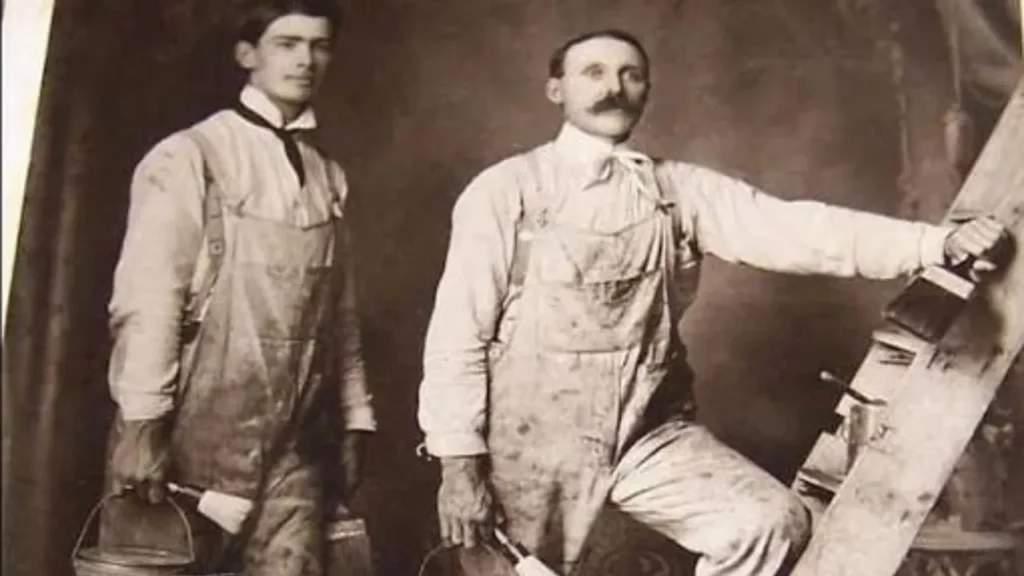
That makes sense from a practical standpoint. Painters needed clothing that could handle physical work, and inexpensive, durable workwear was valuable.
Over time, however, white became much more closely associated with the painting trade.
White Became an Industry Tradition
By the 19th century, white clothing had taken on another role.
Members of the International Union of Painters and Allied Trades used white clothing to identify themselves with the painting profession. In other words, the color wasn’t simply a random fashion choice—it became part of the identity of the trade.
That association lasted.
Even today, you can walk onto a painting job and immediately recognize the traditional look of a painter’s whites.
Does White Hide Paint?
This sounds backwards at first.
Wouldn’t white clothing show paint immediately?
Actually, many of the materials painters commonly work with are light-colored. Primer, caulk, spackle, plaster, drywall dust, and white paint can all leave residue on clothing.
On white workwear, those marks can be less noticeable than they would be on dark clothing.
Of course, colorful paint can still make a very obvious mess. But for the everyday dust and light-colored materials that are part of many painting jobs, white can be surprisingly practical.
Does White Keep Painters Cooler?
There is also a simple reason that white clothing makes sense for outdoor work.
Dark colors absorb more of the sun’s energy, while white reflects more light. For painters working outside during warm, sunny weather, lightweight white clothing can therefore be a practical choice.
This doesn’t mean wearing white magically keeps someone cool. However, it is one small advantage when you’re spending hours working outdoors.
And exterior painting can be physically demanding. A painter may spend the day moving equipment, preparing surfaces, climbing ladders, and working around the property.
Comfort matters.
Is White Still a Requirement for Professional Painters?
No.
There is no general rule that says professional painters have to wear white. Modern painting companies may use branded shirts, uniforms, different colors, or specialized protective clothing depending on the work being performed.
The traditional white uniform simply remains strongly associated with the profession.
In fact, today’s job sites can look quite different from the traditional image of a painter. Depending on the project, workers may need protective eyewear, gloves, respirators, fall protection, or other job-specific equipment.
Safety should always come before tradition.
Does Wearing White Mean Someone Is a Professional Painter?
Not necessarily.
A white shirt doesn’t tell you anything about a painter’s experience or workmanship.
If you’re hiring someone to paint your home, there are much better things to look for.
For example:
- Previous painting experience
- Reviews from past customers
- Clear estimates
- Appropriate insurance
- Good communication
- Careful preparation
- Attention to detail
- A clear scope of work
The best painters understand that the job starts long before the first coat goes on the wall.
Why Preparation Matters More Than the Uniform
A professional-looking paint job depends heavily on preparation.
Before painting, surfaces may need to be cleaned, sanded, repaired, scraped, caulked, or primed depending on their condition.
Then comes the actual application.
Edges need to be clean. Coverage needs to be consistent. Trim and other detailed areas require attention. And the surrounding areas need to be protected from accidental splatters.
That’s where the difference between simply “putting paint on a wall” and completing a professional painting project becomes apparent.
The white uniform may be traditional, but good preparation and workmanship are what really define a professional painter.
Why Do Painters Wear White Today?
So, why do painters still wear white?
The answer is really a combination of history, tradition, and practicality.
White clothing became connected to the trade through historical workwear and later union traditions. It also makes sense on many job sites because light-colored materials are common and white clothing can be practical for outdoor work.
Today, however, the color is optional.
A painter can wear a white uniform, a branded shirt, or something completely different and still do excellent work.
What matters most is what happens to the surface they’re painting.
If you’re planning a residential painting project in Southampton or the Pioneer Valley, Arcadia Painting Co. provides interior painting services and exterior painting services.
Frequently Asked Questions
Why do painters wear white?
The tradition has historical roots in durable white canvas workwear and later became associated with the professional painting trade and painters’ unions. White can also be practical because many common painting materials are light-colored.
Do professional painters have to wear white?
No. White is a traditional color, not a universal requirement.
Does white clothing hide paint?
It can make light-colored paint, primer, caulk, and dust less noticeable than they would be on dark clothing, although colorful paint will still show.
Why do painters wear white pants?
White pants are part of the traditional painter’s uniform and are practical workwear for a trade where many commonly used materials are white or light-colored.